
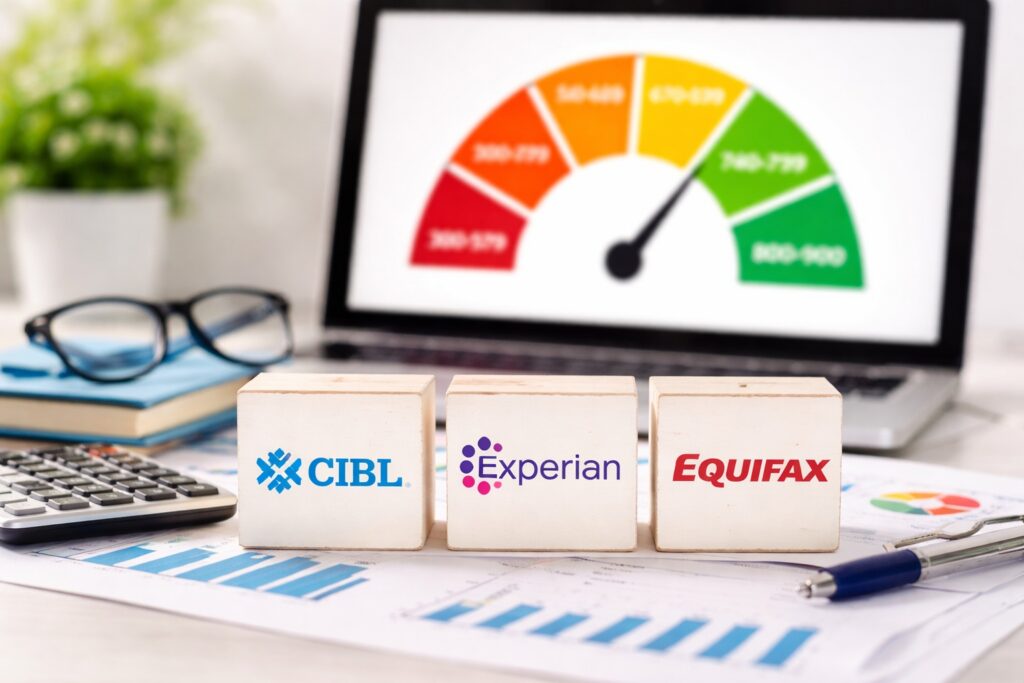
Different credit bureaus may show different scores — here’s why CIBIL, Experian, and Equifax are not always the same
Many people think they have only one credit score.
But in reality, you may have different scores from different credit bureaus like CIBIL, Experian, and Equifax.
These companies collect credit data and calculate scores using their own models.
Because of this, your score may not be exactly the same everywhere.
Understanding the difference helps you avoid confusion during loan or credit card applications.
What Are Credit Bureaus?
Credit bureaus are companies that collect and store your credit history.
They get information from:
– Banks
– Credit card companies
– Loan providers
– Financial institutions
In India, the main bureaus are:
– CIBIL
– Experian
– Equifax
– CRIF Highmark
Each bureau keeps its own record of your credit activity.
Quick Tip
Your credit score may be different in each bureau, but good payment history improves all of them.
Why Credit Scores Are Different in Each Bureau
Your score can be different because:
– Banks may report to one bureau first
– Updates may not happen on the same day
– Each bureau uses a different scoring formula
– Some loans may not appear everywhere
Example:
CIBIL score → 760
Experian score → 745
Equifax score → 752
All can be correct at the same time.
Which Credit Score Do Banks Check?
Most banks in India prefer CIBIL score.
But some lenders also check:
– Experian
– Equifax
– CRIF Highmark
For credit cards and personal loans, lenders may check more than one bureau.
This helps them understand risk better.
Your approval may depend on the bureau they check.
What Is a Good Credit Score in Each Bureau?
Score ranges are similar but not always exact.
Common range:
– 750+ → Good score
– 700–749 → Average
– 650–699 → Low
– Below 650 → Risky
Higher score means:
– Easier approval
– Higher limit
– Lower interest rate
Important
Do not worry if scores are slightly different. Lenders look at overall credit history, not only one number.
How to Keep All Credit Scores Good
To keep good score in every bureau:
– Pay bills on time
– Keep low credit usage
– Avoid too many loan applications
– Check credit report regularly
– Keep old accounts active
All bureaus receive data from the same banks, so good habits help everywhere.
Why This Matters
If one bureau shows wrong data, your loan or card may get rejected even if your other score is good.
How to Check Your Credit Score from All Bureaus
You can check scores from:
Step 1 — Credit bureau websites
Step 2 — Bank apps
Step 3 — Financial apps
Step 4 — Free credit report services
Check at least once every few months.
This helps you find mistakes early.
When Different Scores Can Cause Problems
Different scores may cause issues when:
– Applying for loan
– Applying for credit card
– Requesting limit increase
– Applying for home loan
If one bureau shows low score, approval may fail.
That is why checking all reports is useful.
Bottom Line
CIBIL, Experian, and Equifax all calculate credit scores using your credit history, but the numbers may not always match.
Different scores do not mean something is wrong, but you should check all reports regularly.
Good payment habits, low usage, and fewer loan applications help keep your score strong in every bureau.
Understanding this can help you avoid rejection and manage credit better.
For informational purposes only. Credit score rules vary by bureau and lender. Always check your official credit report for accurate details.