
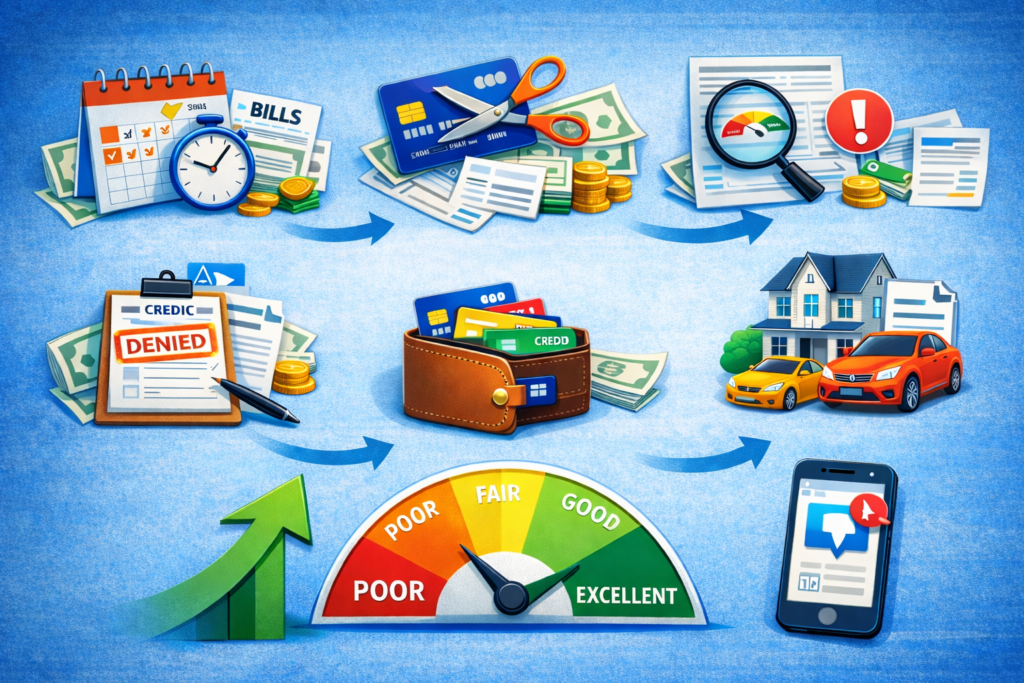
1. Pay Your Bills on Time
Payment history is one of the most significant factors affecting your credit score. Late or missed payments can remain on your credit report for several years and lower your score.
- Set up automatic payments or reminders.
- Always pay at least the minimum amount due.
- Make payments before the due date whenever possible.
2. Reduce Your Credit Card Balances
Credit utilization refers to how much of your available credit you are using. High balances compared to your credit limit can negatively impact your score.
- Try to keep your credit utilization below 30%.
- Pay down existing balances regularly.
- Avoid maxing out your credit cards.
3. Check Your Credit Report Regularly
Reviewing your credit report helps you identify errors, fraudulent activity, or outdated information that may affect your credit score.
- Request your credit report from authorized credit bureaus.
- Verify personal information and account details.
- Dispute any incorrect entries immediately.
4. Avoid Opening Too Many New Accounts
Each time you apply for new credit, a hard inquiry may appear on your credit report. Multiple credit applications within a short time can lower your score temporarily.
- Apply for credit only when necessary.
- Limit multiple applications in a short period.
5. Maintain Older Credit Accounts
The length of your credit history also influences your credit score. Older accounts show lenders that you have long-term experience managing credit.
- Keep older accounts open if possible.
- Use them occasionally to keep them active.
6. Diversify Your Credit Mix
Having different types of credit accounts—such as credit cards, personal loans, or auto loans—can demonstrate your ability to manage various forms of credit responsibly.
- Maintain a balanced mix of credit accounts.
- Avoid opening unnecessary accounts just to improve credit mix.
7. Become an Authorized User
Being added as an authorized user on a trusted person’s credit card can help you build credit history, especially if the account has a strong payment record.
Conclusion
Improving your credit score takes time, discipline, and consistent financial habits. By paying bills on time, managing credit responsibly, and monitoring your credit report regularly, you can gradually build a stronger credit profile and achieve better financial opportunities in the future.