
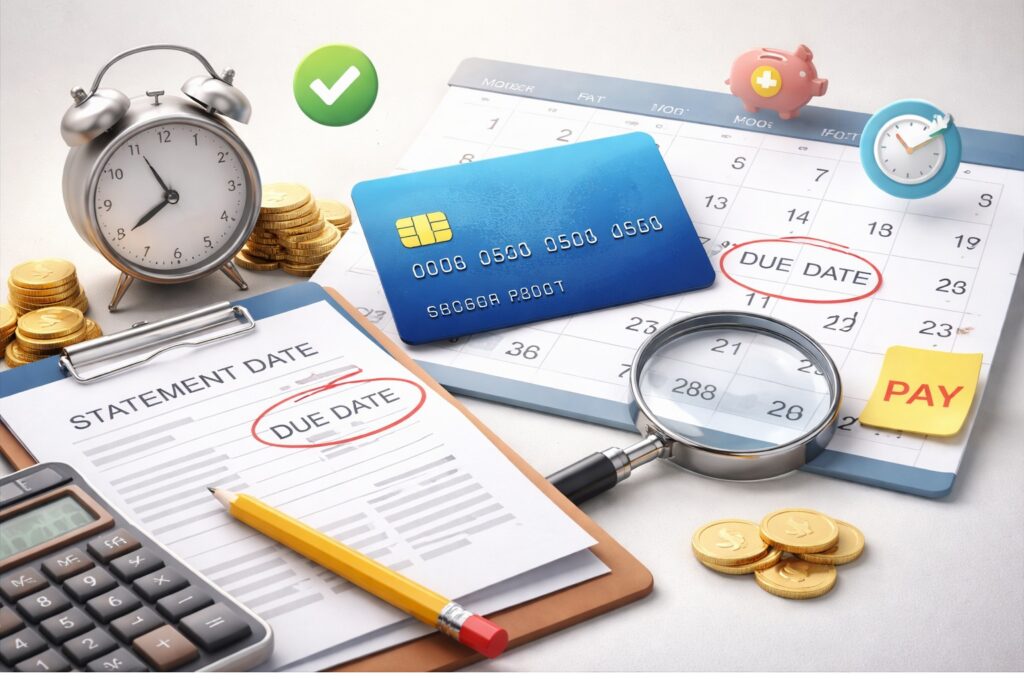
How billing dates, due dates, and interest-free periods really work — and how to use them to avoid paying interest
Many credit card users know their due date — but very few understand the billing cycle and grace period behind it.
These two things control when interest is charged, how long you have to pay, and how you can use your credit card without paying extra.
Once you understand how the cycle works, you can time your purchases better, avoid interest, and even get up to 45–55 days to pay without charges.
The key is knowing how your statement is created.
What Is a Billing Cycle?
A billing cycle is the period during which your credit card transactions are recorded before your statement is generated.
Most billing cycles last around 28–31 days.
At the end of the cycle:
– Your statement is created
– Total balance is calculated
– Minimum payment is shown
– Due date is assigned
Example:
Billing cycle: Jan 1 – Jan 30
Statement date: Jan 30
Due date: Feb 20
All purchases between Jan 1 and Jan 30 appear on that statement.
Quick Tip
If you make a purchase right after the billing cycle ends, you get the longest time to pay without interest.
What Is the Grace Period?
The grace period is the time between your statement date and your payment due date.
During this period:
– No interest is charged
– As long as you pay the full statement balance
– Before the due date
Most cards give a grace period of about 18–25 days.
Example:
Statement date: Jan 30
Due date: Feb 20
If you pay the full amount by Feb 20 → No interest charged.
If you pay less than full → Interest starts.
How You Can Get 45–55 Days Interest-Free
Many people don’t realize this trick.
If you buy something at the start of the billing cycle, you get:
Billing cycle (30 days)
+ Grace period (20 days)
= Around 50 days to pay
Example:
Purchase on Jan 2
Statement on Jan 30
Due date Feb 20
You used the card for almost 50 days with no interest.
But if you buy on Jan 29 → you get only ~20 days.
Timing matters.
What Happens If You Pay Only Minimum Due?
If you pay only the minimum payment:
– Interest is charged on remaining balance
– Interest may apply to new purchases
– Grace period may be lost
This is why many people feel like credit cards are expensive — even when they don’t have to be.
Important
To keep the grace period active, always pay the full statement balance — not just the minimum due.
Statement Date vs Due Date
These two dates are different.
Statement date:
– When the bill is generated
– Balance is finalized
Due date:
– Last date to pay without penalty
– Usually 18–25 days after statement
You cannot change the statement balance after it is generated, but you can avoid interest by paying before the due date.
Why This Matters
Missing the due date can cause late fees, interest charges, and credit score damage.
Even one late payment may stay on your credit report for years.
How to Use Billing Cycles Smartly
Smart card users follow these rules:
– Buy right after the cycle starts
– Pay full balance every month
– Track statement date
– Set payment reminders
– Avoid carrying balance
Doing this lets you use your card like a free short-term loan.
How to Check Your Billing Cycle
You can find your billing cycle in:
Step 1 — Credit card statement
Step 2 — Mobile app
Step 3 — Online account
Step 4 — Card benefits guide
Look for:
– Statement date
– Due date
– Billing period
Once you know these, you can plan payments better.
Bottom Line
Billing cycle and grace period decide when interest starts — not just the due date.
If you understand how statements work, you can use your credit card without paying interest and manage your money more efficiently.
Most people only look at the due date. Smart users track the billing cycle too.
Learning this one concept can save money every month.
For informational purposes only. Billing cycles, grace periods, and interest rules vary by card issuer and card agreement. Always review your credit card terms and conditions for exact details.