
What it is, why it exists, and why it matters more than most people think
You’ve probably heard the term “credit score” thrown around a lot — when applying for a credit card, renting an apartment, or even getting a phone plan. But what exactly is it? And why does a three-digit number have so much power over your financial life?
This article breaks it all down in plain language — no jargon, no confusing formulas. Just a clear, friendly explanation of what a credit score is and why it matters.
The Simple Definition
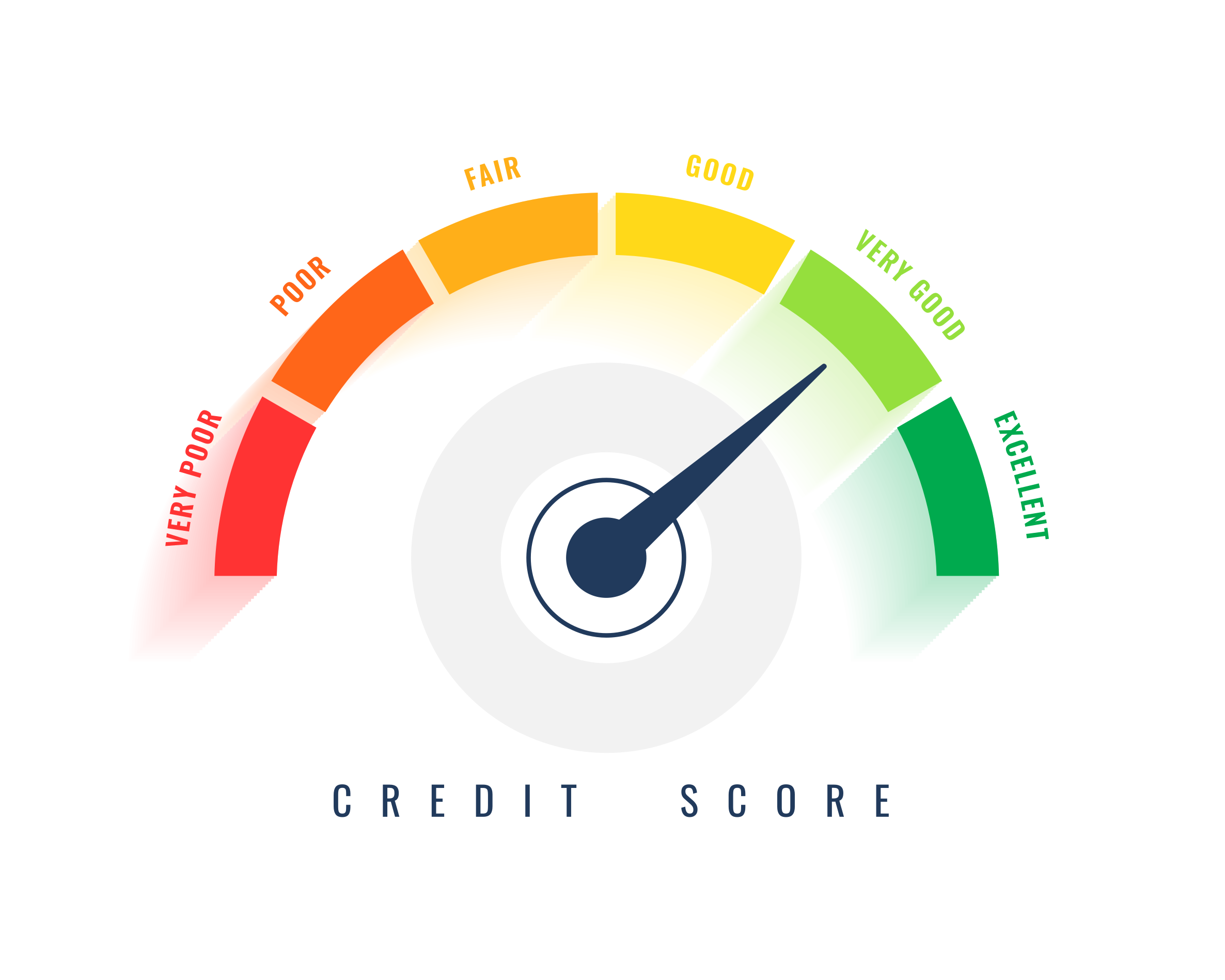
A credit score is a three-digit number — typically between 300 and 850 — that represents how trustworthy you are with borrowed money. The higher the number, the more confident lenders feel lending to you.
Think of it like a financial report card. Every time you borrow money and pay it back on time, your score goes up. Every time you miss a payment or max out a credit card, your score takes a hit.
Score Range at a Glance
300 — 579: Poor | 580 — 669: Fair | 670 — 739: Good | 740 — 799: Very Good | 800 — 850: Exceptional
Who Creates Your Credit Score?
Your credit score isn’t created by the government or your bank. It’s calculated by private companies called credit bureaus and scoring model companies.
The three major credit bureaus — Equifax, Experian, and TransUnion — collect and store information about your borrowing history. They track things like whether you pay your bills on time, how much debt you carry, and how long you’ve had credit accounts.
Scoring model companies — most notably FICO and VantageScore — take that raw data from the bureaus and run it through a formula to produce your score. FICO is the most widely used scoring model in the US, used in over 90% of lending decisions.
Because each bureau collects slightly different data and scoring models vary, you actually have multiple credit scores — not just one. But they’re usually close to each other, and the factors that improve one tend to improve all of them.
Why Does Your Credit Score Matter?
Your credit score affects more areas of your life than most people realize. Here’s where it shows up:
Credit cards — Your score determines which cards you qualify for and what credit limit you receive. A higher score unlocks better rewards cards and lower interest rates.
Loans and mortgages — Whether you’re buying a car or a home, lenders use your score to decide if they’ll lend to you — and at what interest rate. A low score can cost you tens of thousands of dollars in extra interest over the life of a mortgage.
Renting an apartment — Most landlords run a credit check before approving a lease. A poor score can mean rejection or a requirement for a larger security deposit.
Utilities and phone plans — Some utility companies and phone carriers check your credit before setting up service. A low score may require a deposit upfront.
Insurance premiums — In many US states, insurance companies use a credit-based score to help set your auto or home insurance rates. Better credit often means lower premiums.
Employment — Some employers — particularly in finance or positions of financial responsibility — run credit checks as part of the hiring process.
The Real Cost of a Low Score
On a 30-year $300,000 mortgage, the difference between a 620 and a 760 credit score can mean paying $80,000–$100,000 more in interest over the life of the loan. Your credit score is one of the most financially impactful numbers in your life.
What Goes Into Your Score?
Your credit score is built from five key factors. We’ll explore each one in detail in the next article, but here’s a quick overview:
| Factor | Weight | What It Measures |
|---|---|---|
| Payment History | 35% | Do you pay on time? |
| Credit Utilization | 30% | How much of your credit are you using? |
| Length of History | 15% | How long have your accounts been open? |
| Credit Mix | 10% | Do you have different types of credit? |
| New Credit | 10% | Have you applied for new credit recently? |
How to Check Your Credit Score for Free
You don’t need to pay anyone to check your credit score. Here are the best free options available to everyone in the US:
AnnualCreditReport.com — The only federally authorized site to get your free credit report from all three bureaus once per year. This shows the full details of your credit history.
Credit Karma — Free access to your TransUnion and Equifax scores anytime. Updates weekly. Good for monitoring changes over time.
Your bank or card issuer — Many US banks and credit card companies now show your FICO score for free in their app or online portal. Check Capital One, Chase, Discover, and most major banks.
Experian’s free account — Experian offers a free account at experian.com that gives you access to your Experian credit report and FICO score.
Friendly Reminder
Checking your own credit score is called a soft inquiry and does not hurt your score. Check it as often as you like — staying informed is always a good thing.
Bottom Line
Your credit score is a three-digit snapshot of your financial reliability. It’s calculated by credit bureaus using a scoring model like FICO, and it influences everything from loan approvals to apartment rentals to insurance rates. The good news: it’s not fixed. Whatever your score is today, it can be improved — and this series will show you exactly how.
For informational purposes only. Not financial advice. Credit scoring models and bureau practices may vary. Always verify current information with your lender or credit bureau directly.