
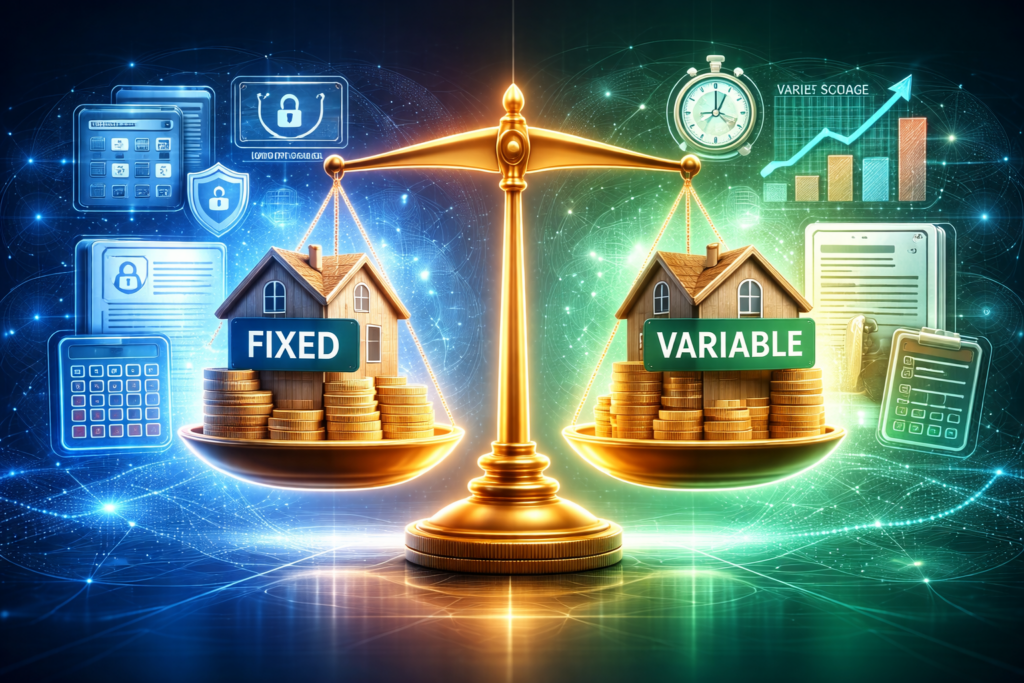
Fixed vs Variable Mortgages: Which Strategy Works Best?
Introduction
When choosing a mortgage, one of the most important decisions borrowers face is whether to select a
fixed-rate mortgage or a variable-rate mortgage. Both options have advantages and potential risks, and the right choice depends on financial goals, risk tolerance, and market conditions.
Understanding how each type works can help borrowers make a more informed decision.
What Is a Fixed-Rate Mortgage?
A fixed-rate mortgage keeps the interest rate the same for the entire loan term. This means the monthly mortgage payment remains stable regardless of changes in market interest rates.
Key Advantages
- Predictable monthly payments
- Protection from rising interest rates
- Easier long-term financial planning
Possible Downsides
- Initial interest rate may be slightly higher
- Borrowers may miss savings if interest rates fall
Fixed-rate mortgages are often preferred by borrowers who value stability and predictable expenses.
What Is a Variable-Rate Mortgage?
A variable-rate mortgage (also called an adjustable-rate mortgage) has an interest rate that can change over time based on market conditions.
Key Advantages
- Often starts with a lower interest rate
- Potential savings if interest rates decrease
- Sometimes offers more flexible loan terms
Possible Downsides
- Monthly payments can increase
- Budget planning may become more difficult if rates rise
Variable mortgages may appeal to borrowers who are comfortable with some level of financial risk.
Factors to Consider Before Choosing
Before deciding between fixed and variable mortgages, borrowers should evaluate several factors:
- Current interest rate environment
- Personal financial stability
- Long-term plans for the property
- Risk tolerance for potential rate changes
For example, someone planning to stay in a home for many years may prefer the stability of a fixed rate, while a short-term homeowner might consider a variable option.
Which Strategy Works Best?
There is no universal answer. The best mortgage strategy depends on individual circumstances.
- Fixed mortgages work well for stability and long-term planning.
- Variable mortgages may offer savings when interest rates remain low.
Many experienced borrowers focus on balancing risk and predictability when making this decision.
Final Thoughts
Choosing between a fixed and variable mortgage is an important financial decision. By understanding the benefits and risks of each option, borrowers can select a mortgage structure that aligns with their long-term financial goals.