
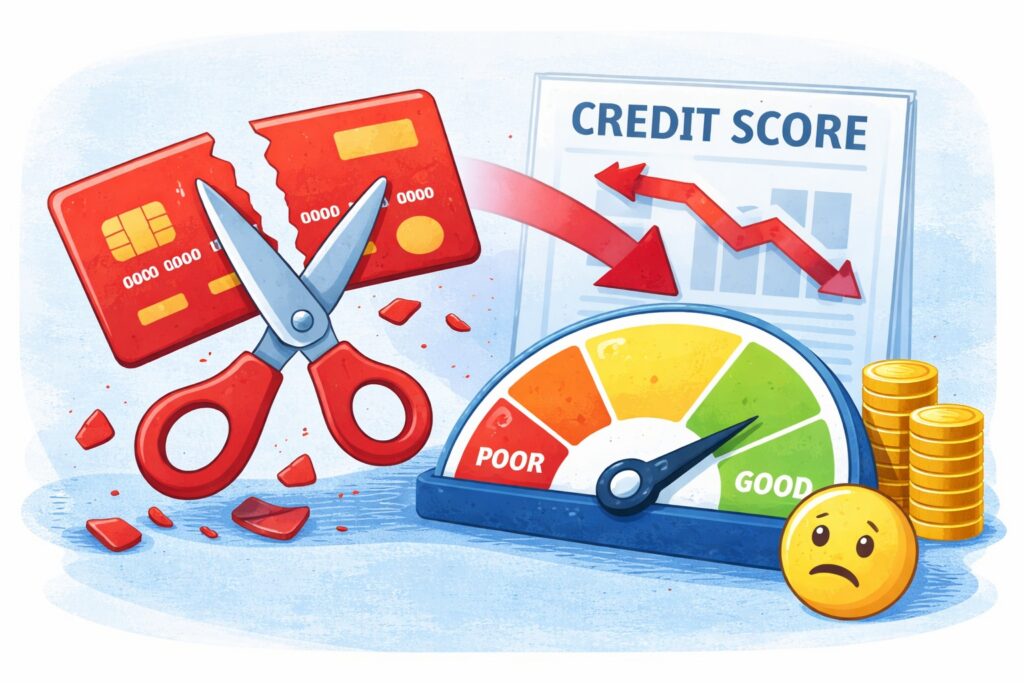
When closing a credit card can reduce your credit score — and when it is actually safe to do it
Many people think closing a credit card will improve their finances, but in some cases it can actually lower your credit score.
Credit cards affect your credit history length, total limit, and usage ratio.
Understanding when to close a card — and when not to — can help protect your score.
Why Closing a Card Can Hurt Your Score
When you close a credit card:
– Your total credit limit decreases
– Your utilization percentage increases
– Your credit history may become shorter
All these factors can lower your score.
Quick Tip
Keeping old cards open with zero balance can help maintain a strong credit score.
Effect on Credit Utilization
Credit utilization = Used limit / Total limit
If you close a card, the total limit becomes smaller.
This makes your utilization higher, even if spending stays the same.
Higher utilization can reduce your credit score.
Effect on Credit History Length
Older cards help build long credit history.
If you close your oldest card, your average history may become shorter.
Lenders prefer longer credit history.
Important
Your oldest credit card is often the most valuable for your credit score.
When It Is Safe to Close a Card
You may close a card if:
– Annual fee is high
– You don’t use the card
– You have enough total limit
– It is not your oldest card
Always check your utilization before closing.
When You Should Not Close a Card
Avoid closing if:
– It is your first card
– It has high limit
– Your utilization is already high
– You plan to apply for loan soon
Why This Matters
Closing the wrong credit card before a loan application can reduce approval chances.
Bottom Line
Closing a credit card is not always bad, but it should be done carefully.
Keep older cards, maintain low utilization, and plan before closing any account.
For informational purposes only. Credit score calculations vary by bureau and lender. Always review your credit report before closing any credit account.